
- THE SINGAPORE MATH APPROACH
Singapore Math
A clear, visual way for children to understand maths and solve problems with confidence.
Learning Hours
Expert Educators
Years of Experience
Bar Model
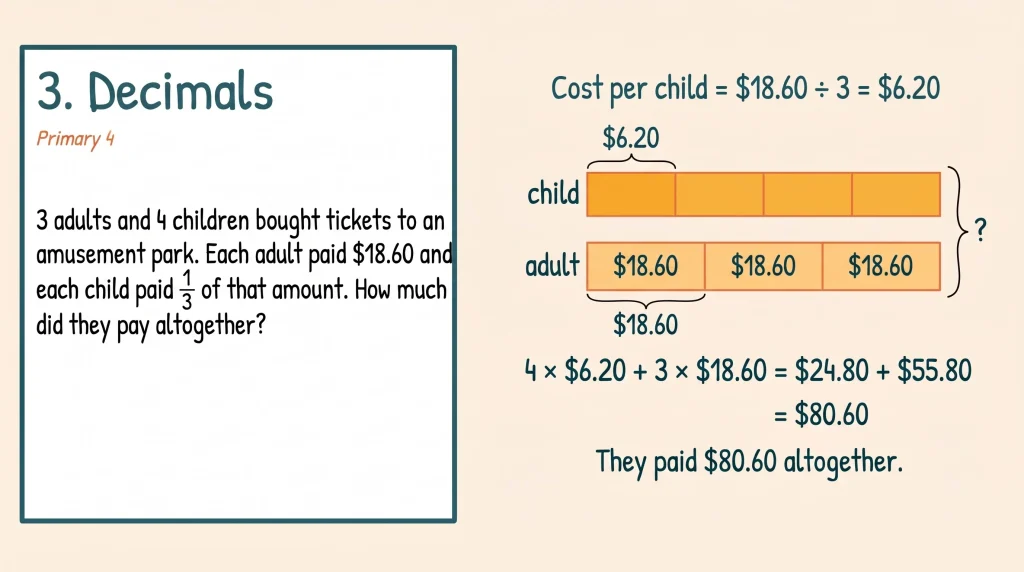
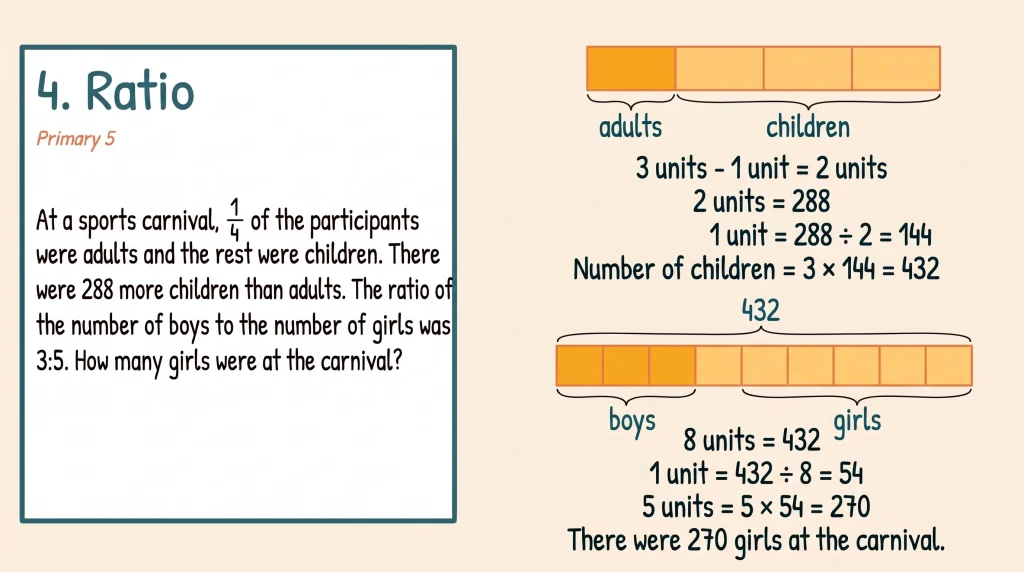
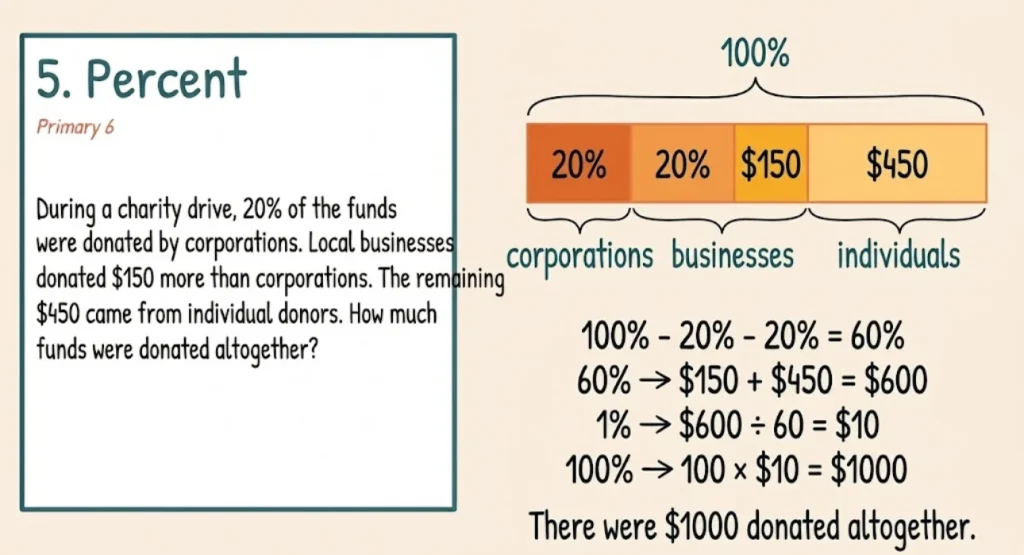
บาร์โมเดลเป็นเครื่องมือหลักที่นักเรียนใช้แก้โจทย์ปัญหาคณิตศาสตร์แบบสิงคโปร์ เป็นหนึ่งในกลยุทธ์การคิด (Heuristic) กลุ่ม “วาดภาพประกอบ” (Draw a picture)
เวลาเจอโจทย์ นักเรียนจะวาดโจทย์ออกมาเป็นแท่งสี่เหลี่ยม ทำให้เห็นภาพ (Visualise) ว่าข้อมูลที่โจทย์ให้มาเกี่ยวกับสิ่งที่ต้องหาอย่างไร เมื่อเห็นความสัมพันธ์ชัดแล้ว นักเรียนก็เข้าใจโจทย์ได้ง่ายขึ้นและหาคำตอบได้ทีละขั้น
บาร์โมเดลยังช่วยฝึกให้นักเรียนคิดอย่างมีเหตุผลและเป็นระบบ และช่วยให้อธิบายวิธีคิดของตัวเองให้คนอื่นเข้าใจได้เป็นลำดับขั้นตอนด้วย
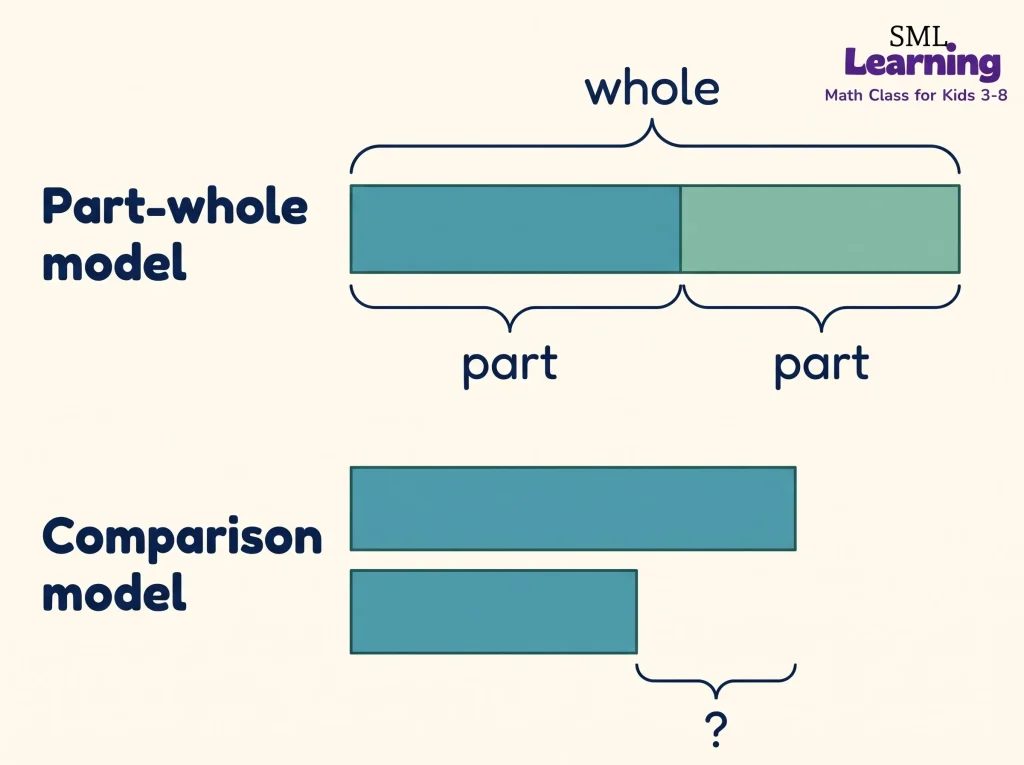
ปกติแล้วบาร์โมเดลมี 2 แบบหลัก คือ Part-whole Model (แบบส่วนย่อยกับส่วนรวม) และ Comparison Model (แบบเปรียบเทียบ)
เวลาแก้โจทย์ปัญหา (Word Problems) นักเรียนจะเลือกใช้แบบใดแบบหนึ่งก็ได้ หรือจะใช้ทั้งสองแบบคู่กันก็ได้ แล้วแต่ลักษณะของโจทย์
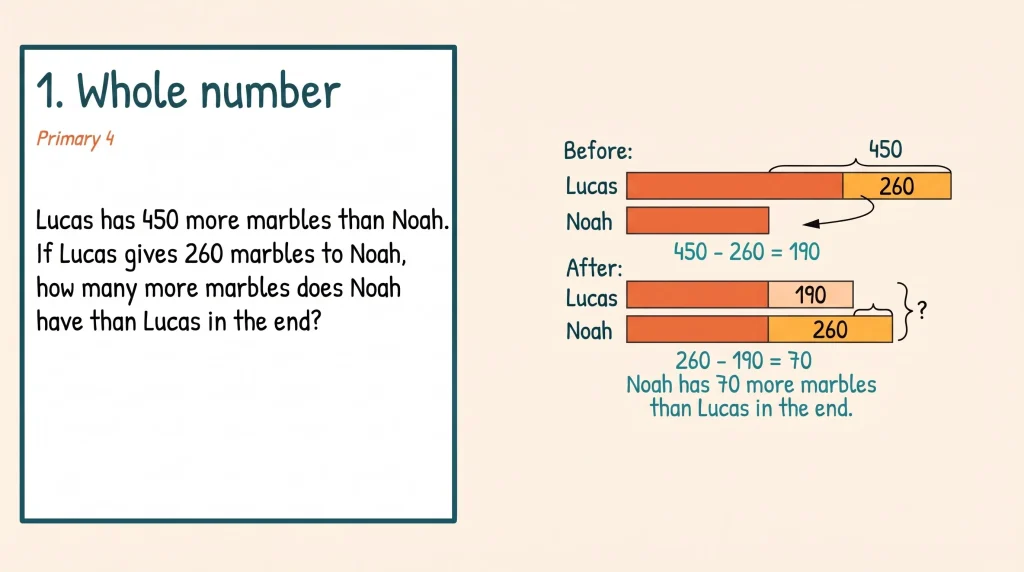
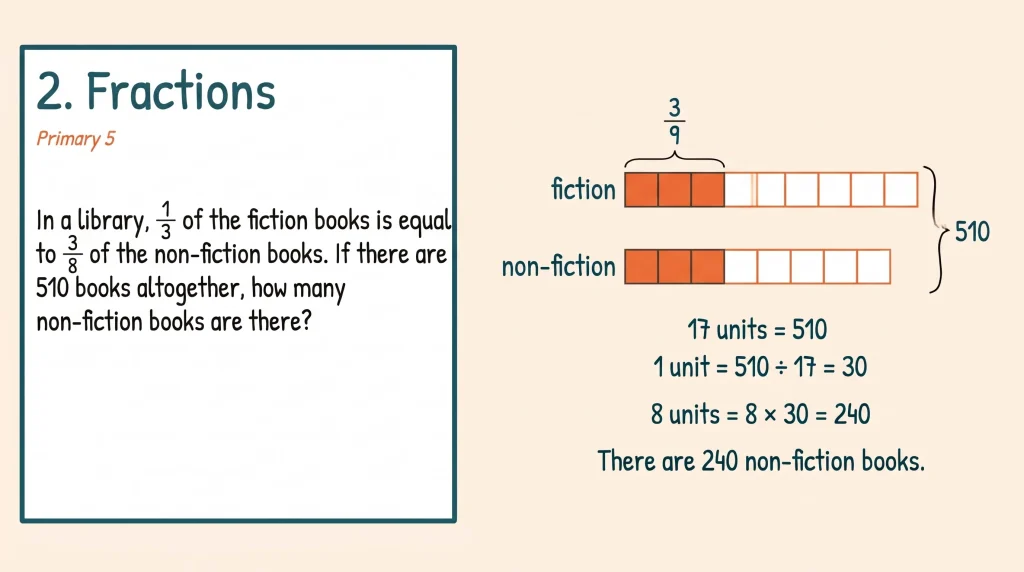
ต่อจากนี้จะยกตัวอย่างให้ดูว่าบาร์โมเดลใช้แตกต่างกันอย่างไรในแต่ละหัวข้อ
How It Works
How Singapore Math Works
A proven method that builds deep understanding step by step, using the Concrete–Pictorial–Abstract (CPA) approach.

Concrete
Children first explore ideas using real, hands-on objects, so maths feels tangible and meaningful.
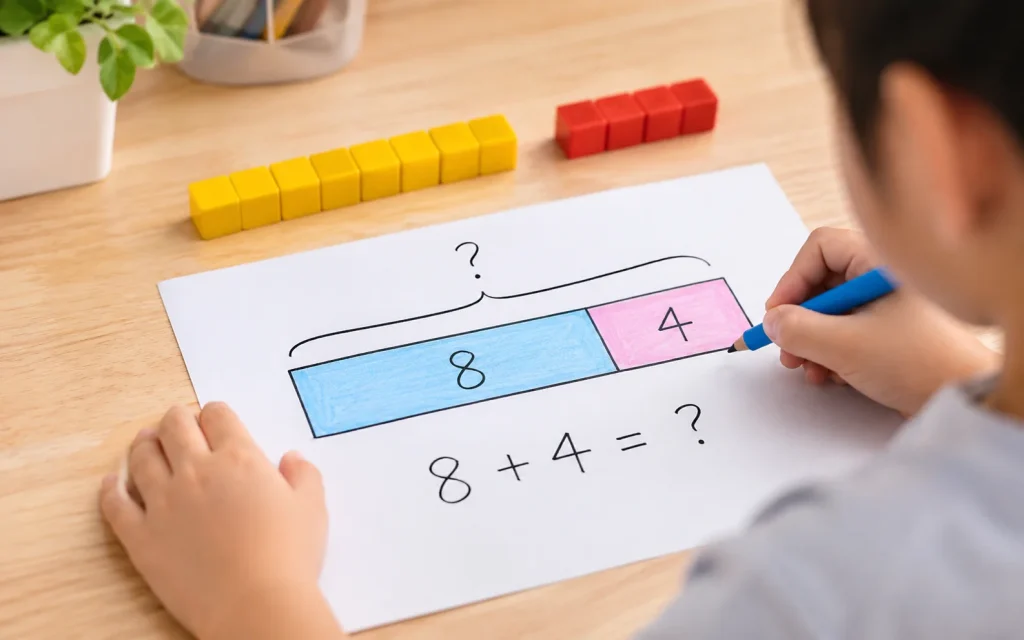
Pictorial
They then use pictures and simple diagrams (e.g. bar models) to represent the problem and see relationships clearly.

Abstract (CPA Approach)
Finally, they use numbers and symbols to solve problems confidently and efficiently.
OUR PROGRAMS
Building Skills Inspiring Confidence
From mastering mathematics to developing confident communication skills, our specialised programs help children build the knowledge, creativity, and confidence they need to succeed.

Number Bonds
See how numbers are related and can be broken apart and put together, a key foundation for mental maths.

Bar Models
A visual way to represent problems, helping children understand quantities, comparisons, and multi-step word problems.

Problem Solving
Apply what they know to real and non-routine questions, developing logical thinking and a flexible approach.

Heuristics
Learn useful problem-solving strategies (e.g. draw a diagram, look for a pattern, work backwards) to tackle more challenging problems.

Growth Mindset
Build resilience, see mistakes as part of learning, and develop the confidence to take on new challenges.
Things TO learn
What Your Child Will Learn
A structured learning journey that builds understanding, skills, and confidence at every stage.

Kindergarten
Build a strong foundation in number sense, patterns, and simple problem solving through hands-on and visual learning.
- Count, read and write numbers
- Compare and order quantities
- Recognise simple patterns and shapes

Lower Primary (P1 – P3)
Develop key mathematical concepts and problem-solving skills using visual models and real-life contexts.
- Know and use number bonds
- Solve word problems with bar models
- Build confidence in mathematical thinking

Upper Primary (P4 – P6)
Apply concepts more deeply, solve multi-step and non-routine problems, and build the reasoning skills needed for upper primary and beyond.
- Tackle multi-step word problems
- Apply key heuristics and strategies
- Develop logical and analytical thinking
Why Choose
Why Parents Choose Singapore Math
♧
Builds a Strong Foundation
- Focuses on deep understanding, not just memorisation.
▥
Develops Real Skills
- Strengthens problem solving, reasoning and critical thinking.
✦
Builds Lasting Confidence
- Helps children feel capable and positive about maths.
♙
A Trusted Approach
- A proven method used by many top-performing education systems.
Problem-solving
Problem-solving techniques: Problem Solving and Heuristics
Understand the problem
Understand the problem.
What is known from the available information? What is still unknown? What are the conditions? And what answer is needed?
Is there enough information to find the answer? Are there any redundant or unnecessary pieces of information?
Draw the picture and add the necessary labels.
Devise a plan
Plan a solution by finding the relationship between the given information and what is unknown or what needs to be answered.
Have you ever encountered a problem like this before, or does it resemble a problem you’ve faced in the past?
Are there any methods that can be used to solve this problem?
If you don’t know yet, try thinking of a similar problem you’ve encountered before.
Can I use the solutions I’ve tried before? Would finding some additional information help solve the problem?
Could we try interpreting the problem from a different perspective? Would that yield different information?
If you haven’t found a solution yet, try identifying similar problems first. Compare them to see what’s related to them. Can you solve parts of the problem? Will substituting unknown information or given data reveal other relationships?
Have you used all the available information? Have you used all the available conditions? Have you interpreted the problem thoroughly?
Carry out the plan
Proceed with the solution as planned.
Use the chosen solution method.
Check each step to ensure that it was done correctly.
Can it be proven that the procedure was correct?
Look back
Check the results.
Can I check the answer? Are there any conflicting conditions in the answer?
Will using different problem-solving methods yield the same answer?
Can this same method be applied to solve other problems?
Steps for Problem Solving
Understand the problem
- Look for information given
- Visualize the information
- Organize the information.
- Connect the information.
Devis a plan
- To make a representation
- To make a calculated guess.
- To go through the process.
- To change the problem
Carrying out the plan
- Use mathematical knowledge.
- Use mathematical skills
- Use logical thinking
Look back (reflecting)
- Check solution - Is it reasonable?
- Improve the method used.
- Seek alternative solutions
- Extend the method to other problems
EXPLORE ALL COURSES
Support for Multiple Math Competitions
Every course is 100% 1-on-1. Personalized pacing, expert tutors, and a proven system built to get you the score you’re aiming for.
• COMPETITION MATH (10 subjects)
• COMPUTER SCIENCE (1 subjects)
FAQs
Questions Parents Ask Us Most.
1. What programs does Singapore Math Learning offer?
We focus on three specialised learning areas: Singapore Math, Math Olympiads, and Public Speaking. Each program is designed to help students develop essential academic, thinking, and communication skills.
2. What is Singapore Math, and how does it help children?
Singapore Math is a teaching approach that emphasises conceptual understanding, visual learning, and problem-solving. It commonly uses the Concrete–Pictorial–Abstract method to help students understand mathematical ideas before moving to abstract calculations.
3. Is the Math Olympiad program suitable for beginners?
Students who are new to mathematical competitions can begin by developing foundational reasoning and problem-solving skills. The most appropriate starting level depends on their current mathematical understanding.
4. How can Public Speaking classes benefit my child?
Public Speaking classes help children improve communication, express ideas clearly, organise their thoughts, and develop confidence when speaking in front of others.
5. How do I know which program is right for my child?
The best program depends on your child’s interests, current skills, and learning goals. Our team can help you explore the options and identify an appropriate learning path.
6. How can I track my child's learning progress?
You can discuss your child’s progress with our team and learn about their development, areas of strength, and opportunities for improvement.
7. How can I enrol my child?
Contact our team to learn more about available programs, suitable learning levels, schedules, and enrolment options.
Blog
Whether you’re brand new to SAT, or want to learn advanced strategies, this is your hub for SAT knowledge and mastery.

Get started
Send Us A Message
Give your child the opportunity to build stronger mathematics skills, think creatively, and speak confidently. Explore a learning experience designed to encourage curiosity, growth, and success.
- A free demo class with a tutor who could be working with you
- A call with a consultant to discuss the best program for you
- We reply within 48 hours